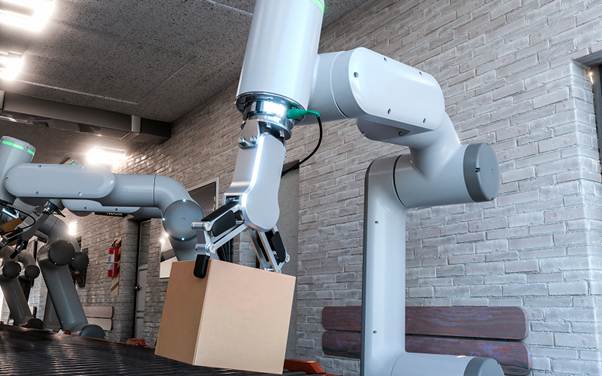
Nowadays, companies are seeking to improve productivity, accuracy, and consistency across production lines through factory automation. A significant contributor to these developments is Helmholz, a trusted name in industrial communication and automation systems. From seamless data transmission to efficient decentralised control, Helmholz components play a vital role in streamlining factory operations.
1. Enhancing Industrial Communication with Helmholz
Effective communication between machines is critical in any industrial automation system. Helmholz offers advanced communication interfaces that support popular protocols, such as PROFIBUS, PROFINET, and Ethernet/IP. These components allow machines and control systems to exchange data accurately and rapidly. This enables real-time process monitoring and faster response times.
By integrating Helmholz technology, manufacturers reduce communication bottlenecks and avoid costly downtime caused by data transmission errors. These solutions are useful in large-scale factories where multiple production lines operate simultaneously, and system coordination is crucial for a smooth functioning system.
2. Supporting Decentralised Control Systems
Decentralised control is a growing trend in modern industrial automation, allowing factories to distribute control functions across multiple controllers instead of relying on a single centralised unit. Helmholz provides modular and scalable I/O systems that make decentralised architectures more flexible and easier to manage.
This setup is particularly beneficial in complex manufacturing environments where adaptability is necessary. With decentralised control powered by Helmholz, production lines can be expanded, reconfigured, or upgraded without a complete system overhaul, helping companies keep up with market demands and process changes with minimal disruption.
3. Integration with Programmable Logic Controllers (PLCs)
PLCs remain the backbone of many automation setups, and companies build Helmholz technology to integrate seamlessly with leading PLC systems. They can incorporate their compact, DIN rail-mountable modules into existing automation frameworks without excessive reprogramming or rewiring. These modules provide the necessary interfaces for signal exchange between field devices and the main PLC, ensuring data integrity and command execution accuracy.
Whether it’s input/output modules, gateway devices, or communication adapters, Helmholz offers practical and space-saving solutions that reduce installation time and maintenance workload, which is a crucial consideration for factories operating in high-speed or continuous production environments.
4. Enabling Remote Access and Diagnostics
Modern industrial automation relies heavily on remote monitoring and maintenance to prevent unplanned downtimes. Helmholz devices support remote access capabilities, enabling engineers to diagnose issues, update firmware, or adjust parameters without needing to be physically present at the factory site.
This action is especially useful for major facilities or multi-location operations, where minimising travel time and service interruptions can significantly reduce operating costs. By allowing prompt remote interventions, Helmholz technology improves the reliability and responsiveness of industrial maintenance teams.
5. Enhancing Network Security and Stability
As factories become more interconnected, cybersecurity in industrial environments becomes increasingly critical. Helmholz network devices offer built-in security functions that help protect communication channels from interference and unauthorised access. Companies engineer their routers and switches to manage network traffic effectively and maintain stable connections under heavy data loads.
The reliability of Helmholz components also contributes to system stability. They build devices to withstand industrial conditions such as temperature variations, vibrations, and electromagnetic interference, making them ideal for harsh factory environments where less robust components would fail.
6. Expanding Capabilities with Modular Architecture
One of the most appealing features of Helmholz technology is its modular design. As production needs grow, factories can expand their systems easily by adding compatible modules to existing setups. This flexibility enables manufacturers to scale operations without needing to replace the entire infrastructure, providing a cost-effective path to modernisation.
This modularity also allows better inventory control and reduces downtime during maintenance, since only specific modules may need to be serviced or replaced. It aligns with lean manufacturing principles and supports operational efficiency across various factory setups.
Conclusion
Helmholz technology supports a wide range of industrial automation needs, from communication and control to security and diagnostics. Its versatility and durability make it a valuable asset in modern factories seeking to improve operational efficiency. By integrating Helmholz into their systems, businesses benefit from flexible, scalable, and reliable automation components that adapt to evolving production requirements.
Contact YT Automation to help you integrate Helmholz technology into your factory systems.